
A Duty of Candour is desperately needed. Ten years on, why is Hillsborough Law stalled?
11 May 2026

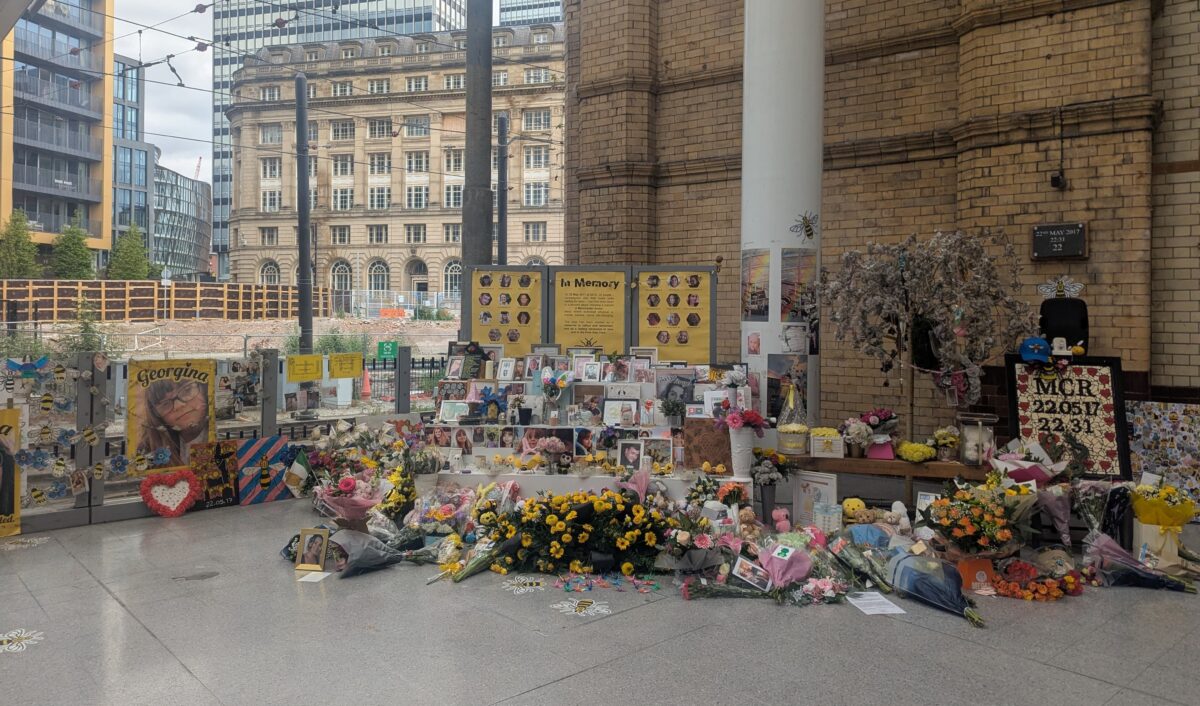
MI5 officials ran a false narrative lacking any candour during the inquiry into Manchester Arena bombing, which tragically killed 22 victims (pictured). Credit: Handout.
The below op-ed was written by Garden Court North’s Pete Weatherby KC, who has represented many of the bereaved families involved in justice campaigns including Hillsborough, Covid-19, Grenfell, and Manchester Arena bombing. Pete led the team which drafted the 2017 Hillsborough Bill, and is one of five Directors of Hillsborough Law Now.
The progress of the Public Office (Accountability) Bill 2026, or Hillsborough Law, is currently stalled because of caveats and exemptions being insisted upon by the intelligence services, and acquiesced to by Ministers. The Prime Minister’s promise to enact the new law as one of his first priorities on being elected has become a distant memory.
The BBC/Beth case is essential reading for anyone who wants to understand the imperative of resolving the current impasse: Attorney-General v BBC [2025] EWHC 1669. Attorney General Richard Hermer will not need to read the judgment because he is a party to the case, as well as one of the Ministers key to finalising Hillsborough Law.
The case relates to an MI5 agent, known as X, and his ex-partner ‘Beth’. A senior BBC journalist, Daniel De Simone, was about to run a story alleging that X had physically and psychologically abused Beth and another woman, and that he had told Beth that he worked for MI5 in order to terrorise and control her. The then Attorney General, Suella Braverman, sought and obtained a High Court injunction restraining the BBC in what they could report. In parallel, ‘Beth’ also made a claim against MI5 to the Investigatory Powers Tribunal, the relevant ‘court’ which deals with cases against the intelligence services, and that claim led to a separate High Court judicial review.
In each of those three cases, a senior MI5 officer known as Witness A provided evidence on behalf of the organisation. That evidence was false, and so the High Court has continued proceedings to determine what should happen as a result, including the prospect of proceedings for contempt. It is to be emphasised that MI5 continued to maintain its position until confronted by records and recordings of conversations between Mr De Simone and the relevant officers. The High Court constitution dealing with this comprises the Lady Chief Justice, the President of the Kings Bench Division, and Chamberlain J, reflecting the seriousness with which the giving of false evidence by a senior public official in largely closed proceedings is being treated.
The High Court has directed that there be a further investigation by the Investigatory Powers Commissioner. The conclusions of that investigation are expected in the next few weeks. The options are that a senior MI5 officer deliberately gave false evidence, or the organisation did not know that the evidence was false, to three different courts.
It is difficult to work out which finding would be more serious for MI5. Responsibility for deliberate wrongdoing would fall on the individual or individuals involved. If it was not deliberate but MI5 processes allowed false evidence to be repeatedly given, who would believe them next time? Especially in proceedings where they assert national security, leading to closed hearings. And what about confidence in closed proceedings themselves, where the highest standards of candour are required?
In making a direction that there should be a full investigation, the High Court has been forthright, concluding:
- “Witness A’s false evidence misled both the High Court (in two separate sets of proceedings) and the IPT” [6]
- “The special advocates, the High Court, the IPT, the Investigatory Powers Commissioner were all misled on the key question…. The proper operation of each of the safeguards is dependent upon high standards of candour on the part of the agencies.” [12a]
- “It is regrettable that MI5’s explanations to this court were given in a piecemeal and unsatisfactory way – and only following the repeated intervention of the court”. [12c]
- “The investigations carried out by MI5 to date suffer from serious procedural deficiencies. Their conclusions cannot presently be relied on.” [12d]
- “This case has raised serious issues. MI5 gave false evidence to three courts. This was compounded by inadequate attempts to explain the circumstances.” [107]
MI5 runs false narrative at the Manchester Arena Inquiry
If the Beth case was a one-off it would be serious enough. Unfortunately, it evidences a pattern of behaviour whereby ‘national security’ is used as a cloak to mask wrongdoing and failure. It is manifestly clear that the security services have a cavalier attitude to candour.
For almost six years, MI5 ran a false narrative about their state of knowledge prior to the Manchester Arena bombing. To this day MI5 are privately briefing the media, MPs and others, that there was no false narrative in the Arena case. But anyone who reads the Inquiry Volume 3 report could only conclude that there was a manifestly incorrect narrative run by MI5 through a series of reviews and inquiries which followed the bombing outrage.
To Lord Anderson KC who conducted an independent review of MI5’s own investigations, and in evidence to the parliamentary Intelligence and Security Committee (ISC), and to the statutory public inquiry, Witness J, an Acting Director-General of Strategy at MI5 asserted that two pieces of intelligence had been received by the service in the months prior to the bombing which related to the bomber and with the benefit of hindsight related to the bombing.
However, so Witness J asserted, the MI5 officers who received these two pieces of intelligence assessed it at the time to be related to minor criminal or non-nefarious activity, not terrorism, and therefore it was not immediately acted upon. That was not correct.

Having heard oral evidence from the officers themselves, the Chair, former High Court Judge Sir John Saunders, found that they had assessed the intelligence at the time to relate to terrorism. Furthermore, Sir John found that there was a real possibility that the bombing could have been prevented if the intelligence had been acted on swiftly as it should have been [§24.81].
With respect to MI5 this was the key evidence. As the Chair found, it was not peripheral, it related to whether the bombing could have been prevented.
Lord Anderson told Panorama that MI5 told him at the time of his review that they thought the intelligence related to drugs or other such criminality [§24.55]. That was not true.
MI5 Director-General Ken McCallum publicly apologised, but only after the Chair rejected his Service’s narrative, almost six years after the bombing. His apology, available on the MI5 website, expresses regret at failing to do everything they should have done to prevent the outrage – but not for advancing a false case.
There is no evidence that Witness J acted dishonestly, but it is clear he/she gave false evidence. He/she had no personal knowledge of what happened, there is no suggestion he/she was misled by others, so their evidence should have reflected the facts of those in MI5 who were directly involved.
The fact that Witness J, the ‘corporate’ witness, gave evidence which was subsequently contradicted by the MI5 officers actually involved in dealing with the intelligence, resonates with the Beth case. In the latter, the High Court has indicated that in future cases corporate evidence must at least identify the relevant witnesses and the full picture [97-106].
As in the Beth case, there are two alternatives regarding MI5’s corporate evidence to the Arena Inquiry: deliberate lying, or an institutional response which had not itself sought to identify the truth, and was cavalier enough to directly and confidently advance a case which was not true.
There is no evidence of the former, but in many ways the latter is more serious, and a failure that MI5 seems to have on repeat. If MI5 or any organisation denies reality to protect its reputation then it will repeat its failures next time. When its lack of candour is uncovered, public confidence will be shattered, international partners and others will not trust it.
A systemic lack of candour – Operation Kenova
The known instances of serious candour failures by MI5 do not end with the Arena. In Operation Kenova, the investigation into the involvement of a British agent, ‘Stakeknife’, in the Irish Republican Army internal security group which killed numerous alleged informers, senior police officers noted that from its outset the investigators were aware of concerns that intelligence information had been deliberately withheld from previous legacy inquiries [§12.1]. The officers asserted that Operation Kenova did itself then face “significant difficulties and friction securing access to relevant material held by MI5” [§12.2].
But worse was to come, and the officers expressed exasperation and even greater concern when MI5 only disclosed highly relevant material eight years after the investigation commenced. This occurred after all prosecution reports had concluded, after the publication of the Kenova Interim report, and only weeks before the entry into force of the Northern Ireland Troubles (Legacy and Reconciliation) Act 2023 which would have brought an end to related criminal and civil claims. The Northern Ireland Director of Public Prosecutions described this as “an extremely unfortunate development”.
MI5 itself commissioned a retired Metropolitan Police Assistant Commissioner to conduct a review of what had happened, and she concluded that the material had not been deliberately withheld. The Operation Kenova Final Report notes that it could not gainsay this but made three things clear: that it was unable to conduct its own independent investigation into the non-disclosure; the former Assistant Commissioner had conducted a review rather than an investigation, and; she had not spoken to the former MI5 staff who had been involved. Ultimately, Operation Kenova described the extremely late disclosure as “a serious organisational failure” by MI5 [§12.30].
Having considered the further material, Operation Kenova roundly rejected MI5’s position that it had only a “peripheral” role in the Stakeknife scandal, finding that:
- “MI5 was aware of Stakeknife’s recruitment from the outset and knew about his identity, role within PIRA and its Internal Security Unit and involvement in the abduction and interrogation of suspected agents who were then murdered” [§12.20(1)].
- the newly disclosed material supported evidence that “MI5 was closely involved with his handling”.
- “everything done in respect of Stakeknife was done with MI5’s knowledge and consent, and MI5 had an influential role” [§12.26].
Furthermore, the material “disclosed two incidents when Stakeknife’s [military intelligence] handlers took him out of Northern Ireland on holiday when they knew he was wanted by the [police] for murder”, and MI5 knew about this at the time [§12.28]. To this day, MI5 and the Cabinet Office have opposed the identification of Stakeknife by Operation Kenova, despite the fact that he is deceased, his name being well-known and in the public domain: Freddie Scappaticci [§4.13 and 9.17].
These are by no means the only examples of major candour failures by the intelligence services. However, they are probably the most clearly documented recent cases. It is rightly said that there can be no compromise when national security is involved. The families and campaigns behind the new ‘Duty of Candour’ contained in the PO(A)B 2026 know that, some of them viscerally. The Manchester Arena bereaved and survivors, the Chinook families, the Nuclear Test Veterans have all been devastatingly affected in circumstances where national security concerns are engaged.
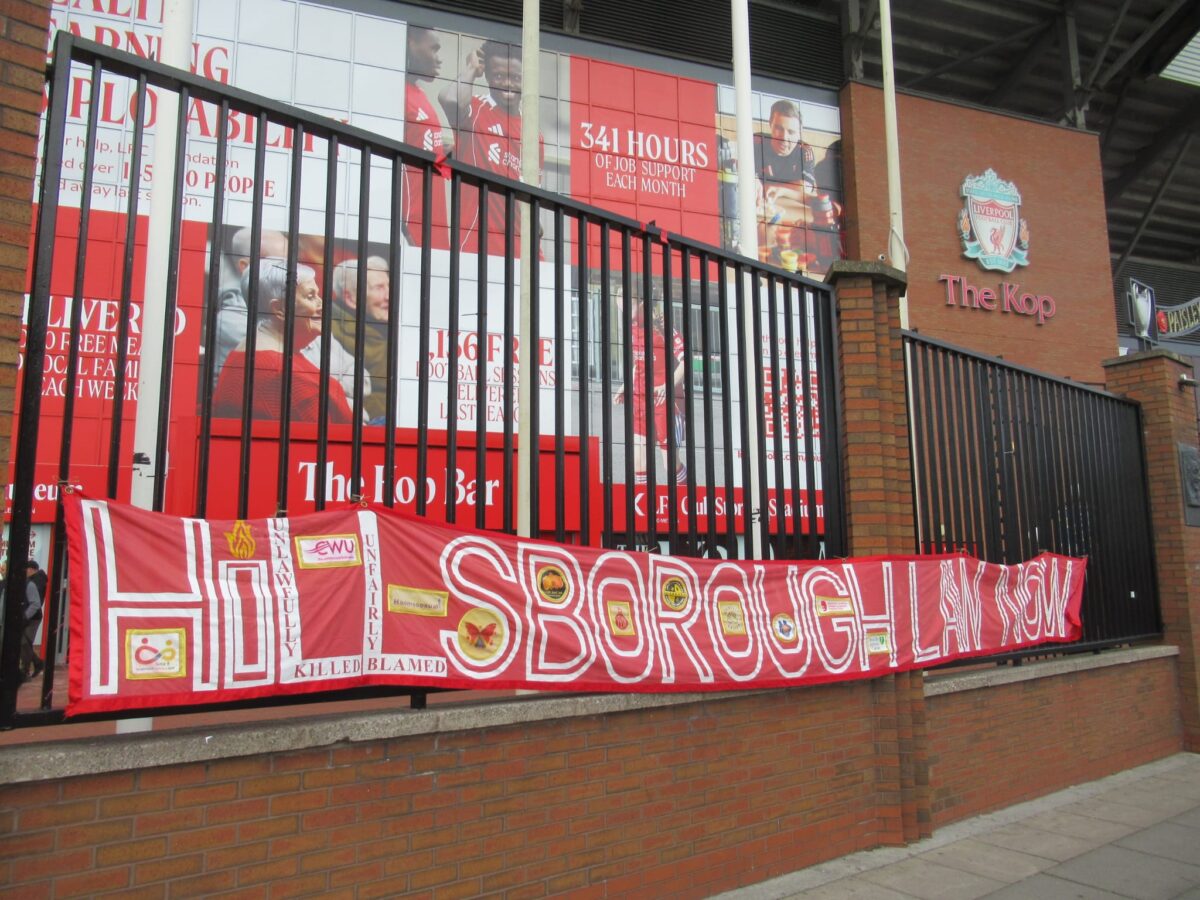
From its inception in 2016, the campaign for a Hillsborough Law has recognised that its provisions must operate within current national security safeguards. That is why the wording of the original 2017 Bill expressly included those safeguards.
The current iteration of the 2026 Bill includes escape routes and a wide discretion to circumvent the Duty of Candour, and not only for the intelligence services but for parts of the Ministry of Defence, the National Crime Agency, and Counter Terrorism Police. That approach does not safeguard national security, it hides failure, and prevents the relevant services being the best that they can be from learning from past errors.
The families and campaign have assisted the Government for the last 18 months in getting this legislation fit for purpose. We have provided a clear way through for the Prime Minister and the Ministers directly dealing with the Bill, which applies current national security safeguards to the new provisions.
In so doing, our Bill ensures that everyone across public service is subject to practical and effective new obligations to proactively tell the truth, but without altering the national security framework whatsoever.
It is time Ministers got off their knees, reminding the intelligence services who is in charge, that no one should be able to evade truth and accountability, and finally enact these measures which are so desperately required.
Additional media
ITV News – Security service expected to ‘not be exempt’ from Hillsborough Law duty of candour
BBC News – How I exposed MI5’s lie about its violent abusive agent
MI5 – Response to Manchester Arena Inquiry report
Garden Court North Chambers – Bereaved families and Pete Weatherby KC call on Government to include security services in Hillsborough Law’s Duty of Candour
For further information, please contact Alex Blair, Communications Manager at Garden Court North Chambers: ablair@gcnchambers.co.uk