
Coroner identifies failings by community mental health and crisis teams which possibly contributed to the death of Imani Rigg
21 September 2026

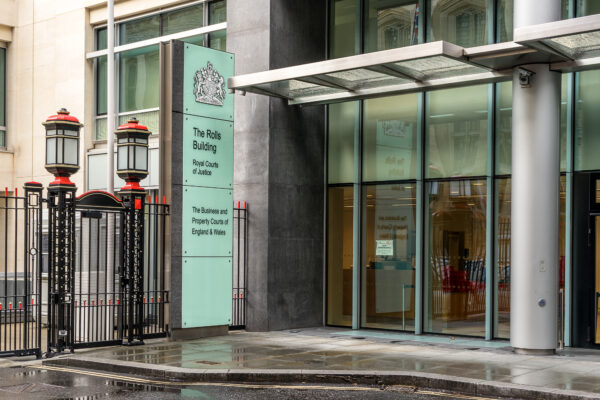
Garden Court North’s Ciara Bartlam represented Imani’s family during the four-day inquest at West London Coroner’s Court (pictured). Credit: Tom Hisgett / Creative Commons.
An inquest into the death of Imani Rigg has found that failings by community mental health and crisis teams possibly contributed her death.
Following the conclusion of the inquest last Thursday (17 September 2026). Assistant Coroner Valerie Charbit identified repeated missed opportunities to prevent the death of Imani, whose family was represented by Garden Court North’s Ciara Bartlam.
Imani tragically died on 8 July 2024, following an incident of self-harm three days after her discharge from the Richmond Home Treatment Team (‘RHTT’). The Coroner found that the risk to Imani’s life could and should have been appreciated by the mental health teams that were working with her, who were aware of Imani’s suicide plans for around five weeks before she tragically acted on them.
The Coroner found that the repeated suggestion that Imani’s life was not at imminent risk was unsustainable, and that the treatment Imani received from South West London and St George’s Mental Health NHS Trust possibly contributed to her death.

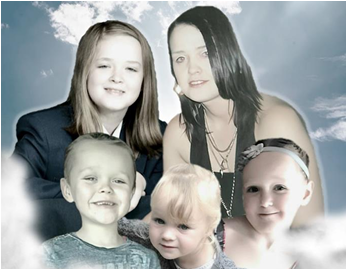
Imani was a much-loved daughter and sister who was precious to the people who knew her. She was a highly intelligent, accomplished primary school teacher who loved her work and was hugely popular with the children she taught. She spoke about them often and fondly, and teaching gave Imani energy and confidence.
Imani’s story
Sadly, Imani experienced trauma in her life, suffering a sexual assault in 2019 which caused her significant emotional pain.
The Coroner found that the EMDR (Eye Movement Desensitisation and Reprocessing) therapy Imani began in March 2024 destabilised her mental health, and she began using medication to excess to numb painful feelings.
In the months that followed, Imani was preoccupied with the upcoming five-year anniversary of the assault in July 2024 and she told her psychologist that she did not want to continue living after it.
The inquest heard that Imani had meticulously outlined all of the factors that had contributed to the decline in her mental state in a pie chart, which was described by her consultant psychiatrist as impressive. These factors included:
- The ongoing impact of the trauma Imani had experienced and the fact that she was not able to continue EMDR therapy in the near future.
- The fact that Imani had been waiting for an ADHD assessment for around two years and was unable to obtain an assessment privately due to the complexity of her presentation.
- Imani’s physical health conditions and the pain they caused her.
- An ineffective medication regime.
- Worries about the transition back to the community mental health team (known as the Twickenham Integrated Recovery Hub) and the lack of any introduction to her care coordinator before their first face-to-face meeting on 5 July 2024, the day Imani was discharged from the RHTT.
- Strong suicidal ideation and Imani’s feeling that she was not ‘here’ and ‘had to go’.
On 12 June 2024, a serious incident occurred in which Imani told RHTT practitioners that she had ordered the item that she intended to use to take her life and was expecting to receive it imminently. A RHTT practitioner made an unannounced visit to Imani and breached her confidentiality, telling Imani’s mother and step-father that they needed to call the ambulance and police services, which they did.
The next day, Imani’s mother emailed the manager of the Twickenham Integrated Recovery Hub to ask for Imani to be admitted to hospital. The inquest heard evidence that this was a ‘Nearest Relative request’ for hospital admission that should have been immediately forwarded to the local authority Approved Mental Health Professional hub, so that Imani could be assessed under the Mental Health Act 1983. The Coroner found that this should have happened.
It transpired that Imani had not yet received the item on 12 June 2024 – but received it the following day. Although RHTT practitioners knew of this information, they did not tell Imani’s parents who understandably thought the immediate crisis had passed.
The Coroner found that there were repeated missed opportunities by the mental health professionals who saw Imani between 13 June 2024 and the date of her discharge from the RHTT on 5 July 2024 to tell Imani’s parents that she had now received the item and that she intended to use it outside of the family home, where they lived together with Imani’s brother. Imani was seen on 11 occasions during this period – every practitioner she saw knew she had the item and that she had purchased it with the intention to take her own life.
Throughout the same period, Imani told mental health professionals that she did not want them to share information with her parents about her care, which included not telling them about the item. The Coroner found that professionals should have appreciated that the only reason that Imani insisted on confidentiality was so that her parents could not stop her from carrying out her plan.
Every RHTT practitioner who was called to give evidence to the inquest said that they did not share information with Imani’s parents because they did not perceive there to be an ‘imminent’ risk to Imani’s life. The Coroner found this assertion to be unsustainable.
The Coroner’s findings – repeated missed opportunities for safeguarding
During her summing up of the evidence, the Coroner detailed the number of times that Imani had told practitioners she felt hopeless or intended to end her life, and the occasions on which practitioners simply listened as she told them that she had taken steps to distribute some of her possessions and was preparing to end her life. The Coroner found that steps could and should have been taken to safeguard Imani, which possibly contributed to her death.
On 5 July 2024, Imani was discharged from RHTT during a visit with three professionals: her psychologist, her care coordinator from the Twickenham Integrated Recovery Hub, and a registered mental health nurse from the RHTT. Imani told them that she had used the item two days before to see what effect it would have on her and ‘blacked out’ until the following the day. This was recognised to have been a serious incident which resulted in the care coordinator questioning whether Imani should be discharged from the RHTT, and asking whether Imani needed to be detained in hospital.
Despite this, Imani was discharged with no effective option to maintain her safety over the weekend, in the knowledge that she would likely use the item again. The registered mental health nurse told the inquest that, in her view, there was a 25-30% chance that Imani would take her own life before her next meeting with her care coordinator six days later.
The Coroner found that the professionals who visited Imani on 5 July 2024 should have escalated the serious incident before discharging her from the RHTT, and that they ought to have taken immediate steps to safeguard Imani by breaching her confidentiality and telling her parents about her intentions. The Coroner also found that Imani’s right to life had arguably been breached by the Trust, and that these failings possibly contributed to Imani’s death.
The Coroner is currently considering whether to issue a report to prevent future deaths. A decision is expected by 15 October 2026.
Speaking after the inquest, Imani’s family said: “It was harrowing to hear mental health professionals describe my daughter as ‘calm’ and ‘capacitous’. If they had sought to consider her neurodiversity as well as her other mental health issues they would have seen a vulnerable adult in great distress, masking to avoid judgement. Following her death, I will work to ensure that mental health staff are more open knowledge sharing in cases of vulnerable adults with mental health challenges. Imani was abused during life; I hope what sits with her in death is the knowledge that she made a difference to so many young people in her role as a much-loved primary school teacher. We’re so grateful to our legal team for exposing the many failures of the Trust. Their willingness to listen and support us at every step of the way was a beacon of light in our darkest days.”
Kelly Darlington, the family’s solicitor, said: “Losing a child is an unimaginable tragedy for any parent and the findings in Imani’s inquest makes that grief even more painful for her family. The Coroner identified a significant missed opportunity to breach Imani’s confidentiality when professionals were told about her intentions to harm herself. This is a missed opportunity we see in so many cases where parents and carers are not properly involved and informed in their loved one’s care, at times when it matters the most.”
Ciara is part of Garden Court North’s inquests and public inquiries team. She was instructed to represent Imani’s family by Kelly Darlington, Partner at Farley’s Solicitors. Garden Court North’s Lily Lewis was also instructed at an earlier stage of proceedings.
Journalists should refer to the Samaritans Media Guidelines for reporting suicide and self-harm and guidance for reporting on inquests.
Additional media
INQUEST – Imani Rigg
For further information, please contact Alex Blair, Communications Manager at Garden Court North Chambers: ablair@gcnchambers.co.uk