

Covid-19 Inquiry’s Module 3 report: NHS was “on the brink of collapse” during the pandemic
20 March 2026
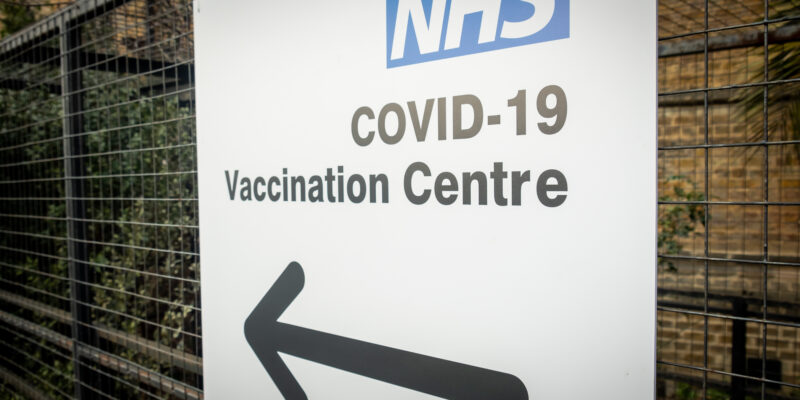
Module 3 of the Covid-19 Inquiry investigated the pandemic’s impact on healthcare systems. Credit: William Barton / Shutterstock.
The Covid-19 Inquiry’s Module 3 report has found that the NHS “teetered on the brink of collapse” during the pandemic, only surviving because of the “superhuman” efforts of healthcare workers.
The Inquiry’s report, published yesterday (19 March 2026) by Inquiry Chair Baroness Heather Hallett, set out a number of findings from Module 3, which investigated the pandemic’s impact on healthcare systems.
The Inquiry has found that the UK entered the pandemic ill-prepared, with overstretched healthcare systems in a precarious state which meant the impact of the virus was “devastating”.
The Module 3 evidence showed that the impact of the pandemic on the NHS was catastrophic, despite the insistence of ministers including former Prime Minister Boris Johnson and former Health Secretary Matt Hancock that the NHS was never overwhelmed. Setting aside this debate, which it described as a question of semantics, the Inquiry concluded that there was “clearly overwhelm” and that patients did not always get the care they needed, notwithstanding the efforts of healthcare workers. Our healthcare systems only just survived.
Key findings and recommendations
Baroness Hallett’s report found that the NHS entered the pandemic with low bed numbers, high numbers of staff vacancies and high bed occupancy, leaving it in an already “precarious position”.
It also highlighted the insufficient supply of PPE and subsequent risk to healthcare workers, who had to put themselves – and their families – at risk to care for patients. 80% of healthcare professionals said they acted in a way that conflicted with their values during the pandemic, as they were unable to give everyone the treatment they needed.
There was also a flawed approach to infection prevention and control guidance, which assumed that Covid-19 was spread by contact and droplet and failed properly to consider aerosol transmission. This put healthcare workers and patients at unnecessary risk of infection.
The Inquiry described the devastating impact on bereaved family members of restrictions on visiting in healthcare settings which meant that many patients died without being able to say goodbye. It recommended the development of guidance for a future pandemic to reflect the importance of visiting and recognise the crucial role of partners in care such as carers for patients with disabilities or communication needs.
Baroness Hallett’s report made ten recommendations it deems necessary to prevent healthcare systems being overwhelmed in the event of the next pandemic. These include:
- increasing capacity in urgent and emergency care and ensuring hospitals have the ability to implement surge capacity;
- strengthening the body responsible for infection prevention and control guidance, broadening its membership to enhance its decision-making and improving the guidance itself;
- improving data collection, enabling individuals at highest risk of harm from infection to be more easily identified and recording deaths of healthcare workers more accurately;
- promoting a standardised process and documentation for advance care planning, recording patients’ preferences for future care and treatment;
- increasing support for healthcare workers, improving retention and increasing resilience; and
- publishing guidance to assist decision-makers, providing clear criteria for clinical decisions if critical care resources become completely exhausted.
On 5 March 2026, the tenth and final module of the Covid-19 Inquiry drew to a close, with Garden Court North’s Anna Morris KC delivering the final closing submission on behalf of CBFFJ UK.
The bereaved now await publication of the Inquiry Chair’s remaining seven reports.
Garden Court North’s Covid-19 Inquiry Team was instructed by Nicola Brook of Broudie Jackson Canter to represent CBFFJ UK. Made up of more than 7,000 families who lost loved ones during the pandemic, CBFFJ UK is one of the Inquiry’s core participants.
Additional media
The Guardian – NHS was ‘on brink of collapse’ during pandemic, Covid inquiry finds
The Independent – Government’s ‘stay at home’ messaging may have cost thousands of lives, Covid inquiry finds
Financial Times – Pandemic brought NHS ‘close to collapse’, says UK Covid inquiry
For further information, please contact Alex Blair, Communications Manager at Garden Court North Chambers: ablair@gcnchambers.co.uk