
High Court rules Somerset Council’s council tax reduction scheme unlawful in application to disabled resident
13 November 2026
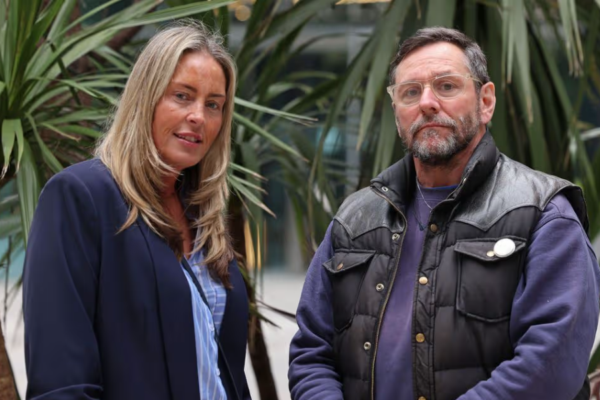
Garden Court North’s Tom Royston and Alexa Thompson have acted for Andy Mitchell throughout his High Court claim. Credit: Lazy Llama.
The High Court has declared that Somerset Council has acted unlawfully in applying the rules in its council tax reduction scheme to a disabled resident, Mr Andy Mitchell, following a high-profile, months-long judicial review.
Mr Mitchell is disabled and unable to work due to multiple physical and mental health conditions. He was in receipt of legacy benefits before being migrated to Universal Credit (UC).
Under Somerset’s scheme, Mr Mitchell was not required to pay any council tax while he received legacy benefits. However, after he migrated to UC, Somerset Council reassessed his entitlement to support and sent him a bill requiring him to pay 90% of the council tax (£1,100 a year) for his property, despite no material change in his income levels or needs as a disabled person. This was because Somerset Council’s scheme treated two elements of his UC award (the transitional element and the LCWRA element) as spare income for the purposes of considering his ability to pay council tax.
In January, the High Court granted Mr Mitchell permission to proceed with his judicial review on the grounds of discrimination, rationality, and compliance with the public sector equality duty.
The judgment’s implications
In a judgment released yesterday (12 November 2026), the High Court found that the rules in Somerset’s scheme were discriminatory, the council breached the public sector equality duty when it adopted its Scheme and it had acted irrationally.
The judge rejected Somerset’s arguments that the Exceptional Hardship scheme, which Somerset Council operates to assist individuals struggling to pay their council tax, mitigated the severe impact of this difference in treatment on disabled people.
The High Court also decided that the council was not required to apply the discriminatory rules in its Scheme. It had the power, under s.13A(1)(c) and (7) of the Local Government Finance Act 1992, to reduce the amount further, including to nil, in the class of cases affected by the discriminatory rules.
Somerset Council will now need to recalculate Mr Mitchell’s council tax liability for the 2025/2026 council tax year, and pay him damages for injury to feelings caused by the discrimination.
Mr Mitchell’s successful challenge follows a recent High Court decision in another council tax reduction case, in which the court ruled Trafford Council’s tax reduction scheme was unlawful. Tom Royston represented the two Trafford residents who brought that challenge. Both cases raise questions about how local authorities design council tax reduction schemes and the consideration given to vulnerable and disabled people with limited income.
Garden Court North’s Tom Royston acted for the successful Claimant, leading Alexa Thompson, alongside Jack Castle of Henderson Chambers, instructed by Carolin Ott and Aurelia Buelens from Leigh Day.
Additional media
High Court – Andy Mitchell, R (on the application of) v Somerset Council [2026] EWHC 2930 (Admin)
Leigh Day – High Court rules Somerset Council tax reduction scheme unlawful in significant victory for disabled resident
BBC News – Disabled man challenges council tax change
For further information, please contact Alex Blair, Communications Manager at Garden Court North Chambers: ablair@gcnchambers.co.uk