
Covid-19 Inquiry: Tenth and final module draws to a close
5 March 2026
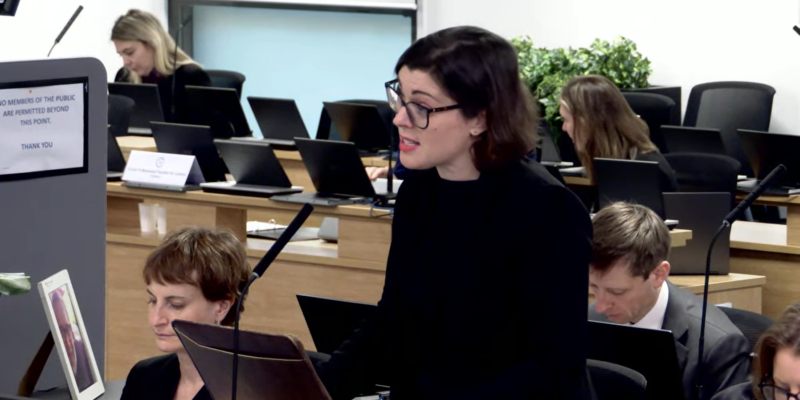
Garden Curt North’s Anna Morris KC (pictured) delivered the closing submission to Module 10 of the Covid-19 Inquiry earlier today (5 March 2026). Credit: Covid-19 Inquiry / YouTube.
After three years, ten modules, and hundreds of hours of powerful evidence at Dorland House, London, Garden Court North’s Anna Morris KC delivered the final closing submission in Module 10 of the Covid-19 Inquiry on behalf of the Covid-19 Bereaved Families for Justice (CBFFJ) UK earlier today (5 March 2026).
“Everyone in this room, and every member of the public has an interest in this public inquiry, and the recommendations it will make about the improvements to planning, preparedness and decision-making for the next pandemic, because it could have been any of us, and it could be any of us in the next pandemic”, Anna said.
“Specifically at the heart of this Inquiry should be those who were bereaved by Covid-19. Having listened carefully to the evidence over the last two days, no-one could have any doubt why the bereaved fought for this Inquiry. Their experiences and their loss are the reason they have come together to campaign and challenge the official narrative on Covid-19”.
Anna, Pete Weatherby KC, Kate Stone and Christian Weaver formed Garden Court North’s Covid-19 Inquiry Team for Module 10, instructed to represent CBFFJ UK by Nicola Brook, Elkan Abrahamson, Clare Fletcher and Zoe McConville of Broudie Jackson Canter. CBFFJ UK, made up of more than 7,000 families who lost loved ones during the pandemic, is one of the Inquiry’s core participants.
As summarised by Pete in his opening submission on 17 February 2026, Module 10 focused on the pandemic’s disproportionate impact on certain sectors of society, drawing on evidence submitted by bereavement groups, homeless shelters, mental health charities and others.
Recommendations for “urgent consideration”
Following the conclusion of the tenth and final module, Inquiry Chair Baroness Hallett will publish eight reports over the next two years that will provide a blueprint for better preparing the UK in the event of a future pandemic.
In her closing submission, Anna called on the Chair to consider a number of recommendations, including;
- Recognition of the unique, complex and prolonged grief that the Covid bereaved are suffering from.
- Support for the CRUSE Recommendations and in particular their recommendation to develop best practice guidance for health care settings with specific regard to managing Infection Prevention and Control (IPC) risk and balancing that with facilitating patient/family contact.
- A recommendation that highlights the importance of candid post-death investigations and processes. The bereaved must be able to understand what happened, must have their questions answered. Even though hospitals and healthcare workers were under the most unimaginable pressures, there must be honesty and accountability as to how those pressures translated into the devastating experiences that the bereaved experiences before and after the deaths of their loved ones.
- Increased independent scrutiny of the deaths of so many of those who died during the pandemic. This must include access to accurate medical records to allow the bereaved find what clarity and reassurance is available to them.
- A National Covid Bereavement Support. As CBFFJ UK member Clare Farnsworth said, considering the evidence given to the Inquiry in Module 10 regarding the high likelihood of prolonged, traumatic grief experienced by Covid bereaved, there is a vital need for this government in the present to fund specialist Covid bereavement support.
- A cross-government bereavement strategy. Dr Royston from the UK Commission on bereavement told the Inquiry that the continued lack of such a strategy was a “notable omission”.
- Recommending better resilience in the funeral and bereavement sector. The Local Government Association evidence was clear that the pandemic revealed a real vulnerability in funeral and bereavement sector. Mr Llewellyn said there was a need strategic direction at national level but flexibility at a local level to reflect the needs of different groups. Mr Norris pressed upon you the need for co-design. People at the local, community level know what is needed. This needs to be taken into consideration for a future pandemic, and there needs to be a better understanding of different faith needs.
Anna also called on the Chair to publicly support a National Oversight Mechanism with “responsibility for collating, analysing and following up on recommendations arising from inquiries, inquests official reviews and investigations”. Both INQUEST and JUSTICE have highlighted the importance of this vital mechanism.
“You can work with the bereaved families to make sure that other people don’t have to suffer”, Anna concluded. “Those who can make meaningful change now have the moral and legal responsibility to ensure that the hundreds of thousands of lives lost mean something. Let that be the impact and the legacy of your Inquiry, My Lady”.
Memorialisation of the bereaved
“May I express our gratitude to the bereaved families who not only fought for this inquiry, but who have continued to fight during this inquiry”, Anna continued. “They have fought to find out what happened and they are still fighting for answers and reassurance that things have changed. We are grateful to Matt [Fowler], Jo [Goodman], and all the witnesses, contributors, organisers, campaigners, moderators and supporters from CBFFJ UK across the UK’s four nations for their ability to keep going, keep sharing and keep challenging”.
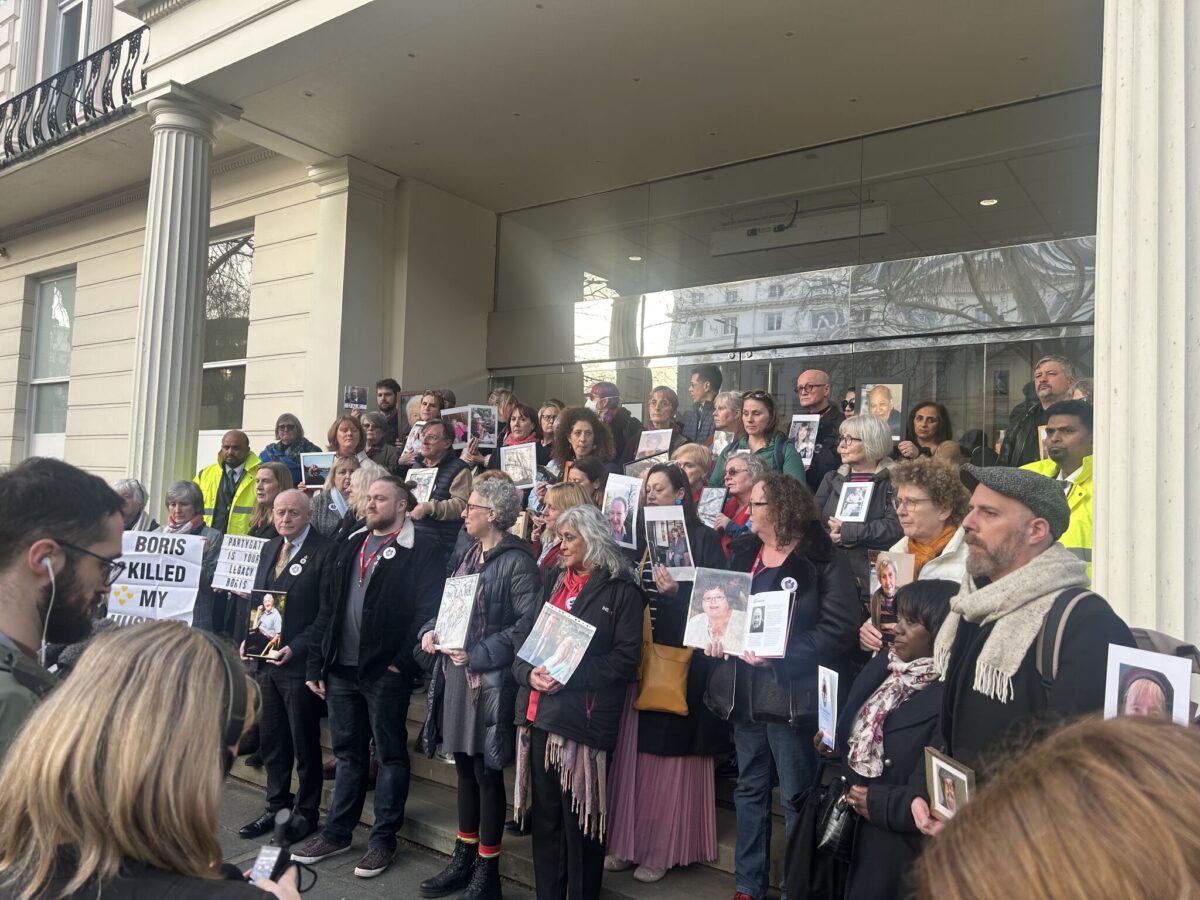
CBFFJ UK is engaged not only in the support of the Covid Bereaved but also the memorialisation of those who died, primarily through the establishment of the National Covid-19 Memorial Wall and other national and local memorials across the UK, be they physical, and cultural or social memorials. There is also the National Day of Remembrance, to be marked for the fifth time this coming Sunday (8 March 2026).

Outside Dorland House this morning, a spokesperson for CBFFJ UK said: “Over the years, we have heard hundreds of hours of evidence, and although only two of the ten reports have been published so far, the Inquiry’s verdict on those in power during the pandemic has already been damning. Thousands of lives cut short because of government incompetence, chaos and callousness. That is what the Inquiry has exposed, and the truth is now on the public record.”
CBFFJ UK now await publication of the Inquiry’s remaining reports.
Garden Court North’s inquests and public inquiries team has been instructed by Broudie Jackson to represent CBFFJ UK on eight of the Covid-19 Inquiry’s ten modules. Our full team is comprised of Pete Weatherby KC, Anna Morris KC, Kate Stone, Christian Weaver, Ciara Bartlam, Mira Hammad, Lily Lewis, and Hamish McCallum.
Additional media
The Guardian – ‘A new normal’: inquiry’s key findings on how Covid changed UK society
The Independent – Covid deaths caused by ‘government incompetence, chaos and callousness’, bereaved families say
For further information, please contact Alex Blair, Communications Manager at Garden Court North Chambers: ablair@gcnchambers.co.uk