
Inquest jury finds “unacceptable delays” by prison officers contributed to Stephanie Brenan’s death at HMP Styal
12 November 2026
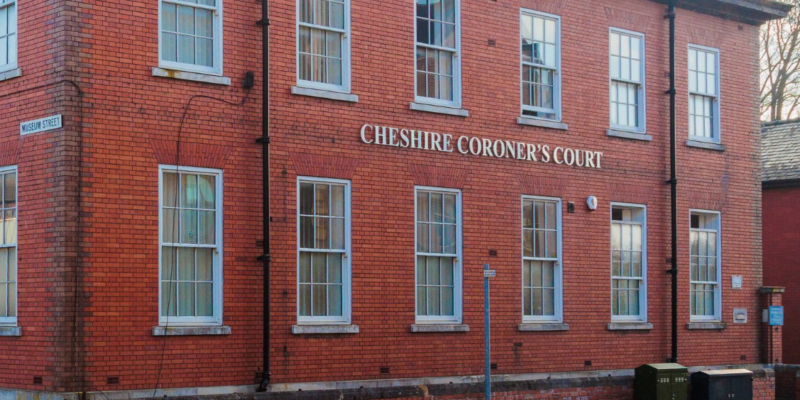
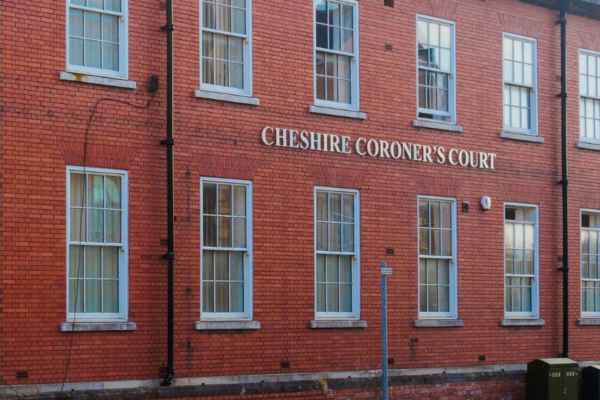
Garden Court North’s Kate Stone and Pragnya Iovine represented Stephanie’s mother, stepfather, and partner during the inquest at Cheshire Coroner’s Court (pictured). Credit: Cheshire Coroner’s Court.
An inquest has found that ”unacceptable delays” by prison officers in answering a woman’s cell bell contributed to her death at HMP Styal, two days before she was due to be released.
Stephanie Lee Brenan, 38, who had a history of mental health difficulties, tragically took her own life on 8 March 2024. After two weeks of evidence at Cheshire Coroner’s Court, the jury concluded that prison officers’ failure to respond to her cell bell on that day contributed to her death.
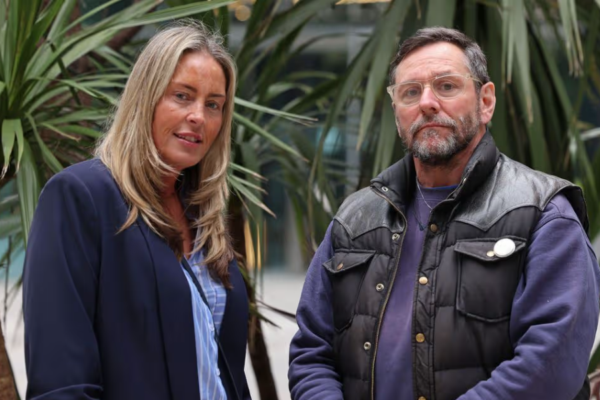
Garden Court North’s Kate Stone represented Stephanie’s mother and stepfather, instructed by Betty McCann from Deighton Pierce Glynn Solicitors, while Pragnya Iovine represented Stephanie’s partner, instructed by Elaine Macdonald and Natasha Hanmer at Broudie Jackson Canter.
8 March 2024
Stephanie had been booked in for a salon appointment on the morning of 8 March. The jury heard that officers did not take her to it, and that she became increasingly emotionally dysregulated as the day went on.
Officers interacted with Stephanie on several occasions that day, but the jury heard that they did not recognise her distress and instead described her behaviour as “abusive”. Recordings of phone calls between Stephanie and her partner, Ryan, played to the jury, showed how distressed she was. In one, she said an officer who had dealt with her had made her feel horrible.
The jury heard that officers were expected to answer emergency cell bells within five minutes. One officer told the inquest that “they are called emergency cell bells for a reason”, adding that they are the only way prisoners can call for help and that prisoners are wholly reliant on officers responding.
Stephanie pressed her cell bell several times that day. On one occasion it went unanswered for 40 minutes. The last time she pressed it, it went unanswered for an hour and 15 minutes. When an officer eventually attended, Stephanie was found unresponsive. Prison policy requires cell bells to be answered within five minutes. Every officer who gave evidence confirmed this, and all accepted that response times of 40 minutes and an hour and 15 minutes were unacceptable.
CCTV showed officers walking past Stephanie’s cell while the bell was active. Officers were also on the landing, where an indicator was signalling the active bell with what the Deputy Governor Nicola Corrie described as a “shrilling noise”. One officer spent most of the morning in the office, where a cell bell panel displayed the activated bell and sounded an alarm. Although the bell could be seen or heard in several places, the officers said they did not hear anything or notice that it was active.
The jury also heard that Stephanie had been shouting and kicking her cell door, and that other prisoners could hear her, which the prison officers on shift denied.
Deputy Governor Corrie told the inquest it was unlikely that an officer walking past an activated cell bell would not have noticed it, or that officers would not have heard the alarm. Having heard the phone calls between Stephanie and her partner Ryan, she confirmed that it would have been likely that Stephanie’s distress would have been audible to prison officers on duty.
A case for the Hillsborough Law
Two of the officers on duty that day no longer work at the prison and faced disciplinary proceedings.
Officers accepted that they had attended a training called ‘Behind the Behaviour’, which uses a trauma-informed approach to teach staff that behaviour that may appear hostile can be a sign of distress.
One officer candidly told the inquest that having done the training did not mean that she put it in practice. She also described a culture in which prison officers responded to women shouting at them by slamming their cell hatch and walking away, and complaining about them in the staff room.
The jury heard that the HMP Styal was running a split regime because of reduced staffing levels, with three officers on shift that day. Under the prison’s split regime, prisoners are unlocked in separate groups. The jury heard that there weren’t any emergencies that day, and according to Governor Corrie, the prison officers should have been able to carry out their tasks and answer the cell bells.
Partway through the inquest, it emerged that CCTV footage and other records relating to the management checks of the cell bell system, had not been disclosed, despite being requested by the legal representatives of Mr Lewis and Ms Brenan’s family.
The Coroner stated that the issues regarding disclosure were “serious” and that if the Hillsborough Law – officially the Public Office (Accountability) Bill – had been in place, she would have issued an order against the prison. The Hillsborough, co-drafted by Garden Court North’s Pete Weatherby KC, has just completed the Committee Stage in the House of Lords, and now returns to the House of Commons for the Report Stage. Among other provisions, it will impose a legal Duty of Candour on state institutions including prisons.
A Prevention of Future Deaths report
After two weeks of evidence, the jury found that Ms Brenan’s death was contributed to by the “unacceptable delays” in answering her cell bells, as well as the officers’ inexperience in implementing the restricted regime.
The Coroner confirmed that she will be issuing a Prevention of Future Deaths report regarding the effectiveness of the cell bell system.
The PPO investigation into Stephanie’s death noted that in the most recent inspection of HMP Styal in 2024, the rate of self-harm had doubled since the previous inspection, with 5,262 incidents reported in the previous year, which was the second highest of the 12 women prisons inspected.
Stephanie’s death came just three months after the tragic death of Alex Davies, also at HMP Styal. Garden Court North’s Ciara Bartlam represented Alex’s family during the inquest into her death, which found that neglect contributed to her death – a rare conclusion only reached where there has been a gross failure to provide basic medical attention, causing an individual’s death.
Kate Stone represented Stephanie’s mother and stepfather, instructed by Betty McCann from Deighton Pierce Glynn Solicitors. Pragnya Iovine represented Stephanie’s partner, instructed by Elaine Macdonald and Natasha Hanmer at Broudie Jackson Canter.
Journalists should refer to the Samaritans Media Guidelines for reporting suicide and self-harm and guidance for reporting on inquests.
Additional media
HMP Inspectorate of Prisons – HMP/YOI Styal
DPG Solicitors – Inquest into death of vulnerable woman at HMP Styal finds “unacceptable” delay in cell bell response contributed to death
Knutsford Guardian – Inquest opens into death of woman while in custody at HMP Styal
For further information, please contact Alex Blair, Communications Manager at Garden Court North Chambers: ablair@gcnchambers.co.uk