
Southport Inquiry Phase 1 report finds “catastrophic” failures by multiple agencies
14 April 2026

Garden Court North’s Pete Weatherby KC and Christian Weaver represent the three adult survivors and Prestfield High School in the Southport Inquiry. Credit: Andrew Brown / Stand Up For Southport.
The Southport Inquiry’s Phase 1 report has found that the horrific knife attack at a children’s Taylor Swift dance event on 29 July 2024 was possible due to “catastrophic failures” by multiple agencies.
The report, published yesterday (13 April 2026) by Inquiry Chair Sir Adrian Fulford, condemned the “inappropriate merry-go-round” of state bodies refusing to deal with the attacker, despite his violent behaviour being “clearly, repeatedly, and unambiguously signposted over many years”.
The attacker murdered three young girls, Elsie Dot Stancombe, Alice da Silva Aguiar and Bebe King, and injured multiple other children and adults. Whilst others survived the attack physically unharmed, they all live with the serious emotional scars.
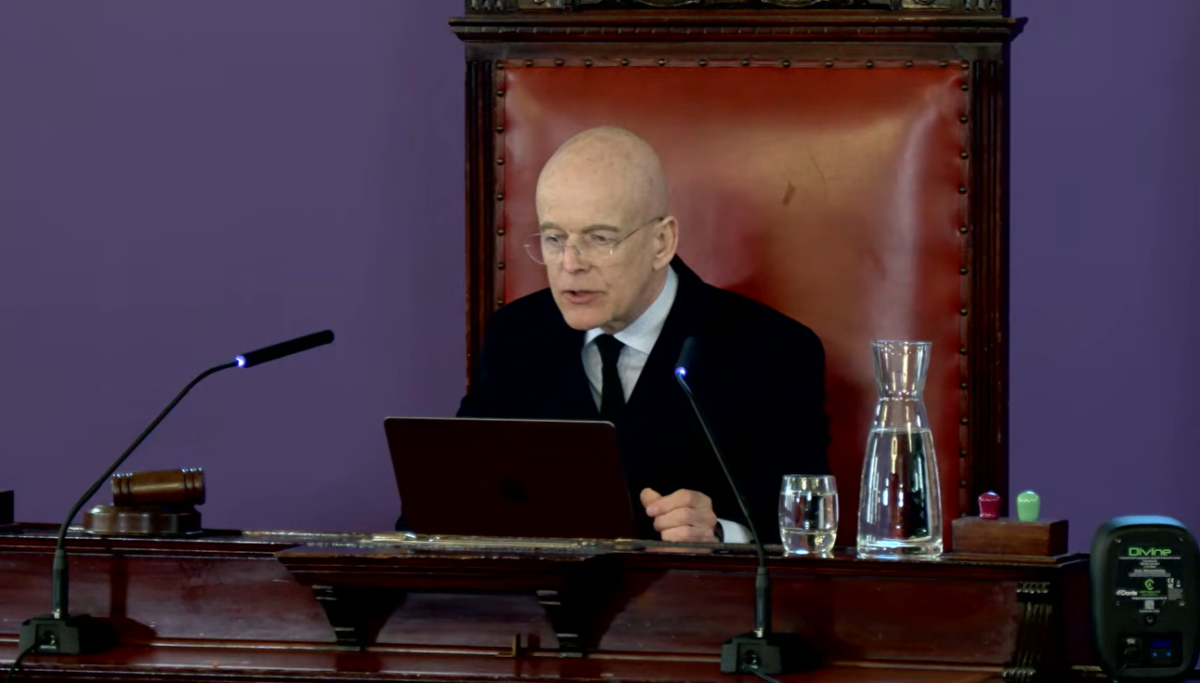
Speaking at Liverpool Town Hall, Sir Fulford said: “Today is in recognition of Elsie, Bebe and Alice, of those who were physically and psychologically injured, and to the families whose lives have been irreparably changed. Our work has been to establish a clear, unflinching account of how such an appalling event occurred, and what must change to ensure it is never repeated.”
A preventable attack
The report, which states from the beginning that the attack was “foreseeable and avoidable”, highlights five major areas of systemic failure. These are:
- Absence of risk ownership. No agency or multi-agency structure accepted responsibility for assessing and managing the grave risk posed by the perpetrator.
- Critical failures in information sharing. Essential information was repeatedly lost, diluted or poorly managed across agencies.
- Misunderstanding of autism. The attacker’s conduct was wrongly attributed to his autism spectrum disorder, leading to inaction and a failure to address dangerous behaviours.
- Lack of oversight of online activity. The attacker’s online behaviour, which provided the clearest indications of his violent preoccupations, was never meaningfully examined.
- Significant parental failures. The attacker’s parents did not provide boundaries, permitted knives and weapons to be delivered to the home, and failed to report crucial information in the days leading up to the attack.
The Chair said the attack of “unparalleled cruelty” happened after a “complete failure” of Britain’s multi-agency model. He urged ministers to establish a dedicated agency to oversee complex offenders such as the Southport attacker.
The attacker was referred to three times to Prevent, the UK Government’s counter-terrorism programme. Concerns were dismissed, partly because he did not express a clear ideology.
The Chair also criticised an “unacceptable and superficial” tendency of professionals to “excuse” the attacker’s increasingly violent and unpredictable behaviour on the basis of his suspected, and later confirmed, autism. He added: “far too often, [the killer’s] case was passed from one public sector agency to another in an inappropriate merry-go-round of referrals, assessments, case-closures and hand-offs”.
Overall, the report concludes that there was a serious failure by a number of relevant agencies to share risk information about the perpetrator, assess the risk he posed, and act on that information in an effective multi-agency way so as to mitigate his risk.
Garden Court North’s Pete Weatherby KC represents the three adult survivors of the attack, leading Jesse Nicholls of Matrix Chambers, instructed by Nicola Brook of Broudie Jackson Canter Solicitors. Christian Weaver represents Prestfield High School, instructed by Terry Wilcox of Hudgells Solicitors.
Hearings for the Southport Inquiry began in September 2025. Phase 2 of the Inquiry will begin immediately, aiming to conclude proceedings and publish a report by May 2027.
Additional media
Southport Inquiry – Report
The Guardian – Southport attack inquiry blames ‘catastrophic’ failures by agencies and killer’s ‘irresponsible’ parents
BBC News – Southport killer’s parents failed in ‘moral duty’ to report son
ITV News – What were the five key findings in the Southport Inquiry Phase One report?
For further information, please contact Alex Blair, Communications Manager at Garden Court North Chambers: ablair@gcnchambers.co.uk