
Council tax reduction scheme unlawfully discriminated against Universal Credit claimants
6 February 2026
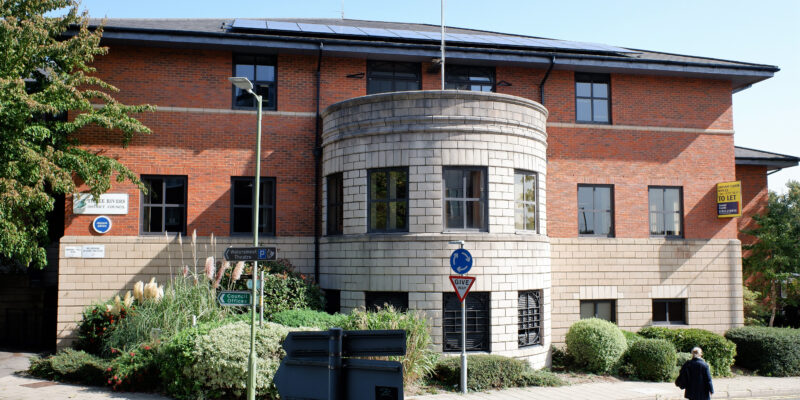
Garden Court North’s Tom Royston represented the two Three Rivers residents in their claim against the local authority. Credit: Peter Fleming / Shutterstock.
In a judicial review claim brought against Three Rivers District Council by two of its residents, the High Court has this week declared that the local authority’s scheme for calculating low income residents’ council tax liability unlawfully discriminated against them. The decision – R (Bleakley) v Three Rivers AC-2025-LON-004451 – was handed down on Monday (2 February 2026).
All local authorities are required to operate council tax reduction schemes for residents in financial need. The Claimants both have severe disabilities, and as a result can no longer work, so are in financial need.
In 2025, the two Three Rivers’ residents were ‘migrated’ from the income replacement benefit Employment and Support Allowance to its replacement, Universal Credit (UC). Their income did not change, with a portion of their new UC award comprised of ‘transitional protection’.
However, the council tax reduction scheme of their local authority, Three Rivers District Council, treated the transitional protection as surplus income. As a result, the Claimants suddenly went from being exempt from council tax to being liable to pay more than £1,500 per year.
The High Court holds that this treatment was discriminatory, because of the connection between the Claimants’ disabilities and their receipt of transitional protection. The discrimination was not justified: the Claimants’ income had not increased, and their needs had not decreased. There was no reason to suddenly make them liable to pay a large council tax bill.
Three Rivers conceded the claim before a final hearing. The local authority will now have to disregard UC transitional protection payments for all residents. It also has to pay the Claimants damages for the discrimination, refund all the council tax they had so far paid this year, and pay their legal costs.
Approximately one million households across the country have, or will have, transitional protection as part of a UC award. Some council tax reduction schemes have not been updated to disregard those payments. As a result, moving to UC can cause claimants to receive large and unexpected council tax bills.
This case illustrates that local authorities whose council tax reduction schemes fail to disregard UC transitional protection payments may be acting unlawfully.
Emma Pein at Bindmans instructed Tom Royston, who led Jack Castle of Henderson Chambers. Tom has acted in a number of previous successful challenges to council tax reduction schemes, including: R (Winder) v Sandwell MBC, R (Osman) v Croydon Council and R (LL and AU) v Trafford Council.
Additional media
Garden Court North Chambers – High Court grants judicial review for disabled Somerset resident to challenge council tax reduction scheme
Garden Court North Chambers – Trafford Council’s tax reduction scheme quashed following High Court legal challenge
For further information, please contact Alex Blair, Communications Manager at Garden Court North Chambers: ablair@gcnchambers.co.uk