

Christian Weaver’s Pegasus Scholarship Diary – Malaysia (Part 1)
22 September 2026
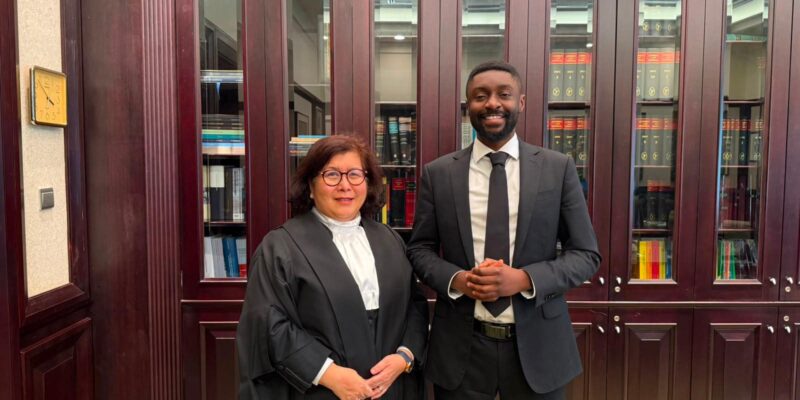
Garden Court North’s Christian Weaver (right) with Justice Dato’ Faizah binti Jamaludin (left), a Judge at the Malaysian Court of Appeal.
Garden Court North’s Christian Weaver has successfully completed a six-week programme for the Pegasus Scholarship in Kuala Lumpur, Malaysia, which he was awarded by The Honourable Society of the Inner Temple.
In Kuala Lumpur, Christian was given the unique opportunity to step outside of his busy practice as part of Garden Court North’s inquests and public inquiries team and experience another country’s legal system from the inside; visiting courts of law, observing criminal investigations, and spending time with Malaysian judges, legal aid practitioners, and others involved in the administration of justice.
Upon completing the scholarship, Christian reflected: “Looking back, the level of access the scholarship provided was remarkable. Over the course of the placement I was able to spend sustained periods with senior members of the Malaysian judiciary, leading human rights and criminal practitioners, lawyers involved in strategic litigation and members of the Malaysian Bar.”
“Those conversations often went well beyond the particular case or hearing I happened to be observing. They allowed me to compare legal systems, test some of my own assumptions and think critically about the kind of practitioner I want to become.”
“I am very grateful to The Inner Temple and The Malaysia Inner Temple Alumni Association (MITAA) for giving me this opportunity, and to Garden Court North Chambers for supporting me in taking up the scholarship and accommodating a significant period away from my ordinary practice. Opportunities of this kind require flexibility from chambers, and I appreciated having the space to immerse myself properly in the experience.”
Christian has written Part One of his Pegasus Scholarship Diary below.
Week One
Thursday 11 & Friday 12 June – Introductions and Settling In
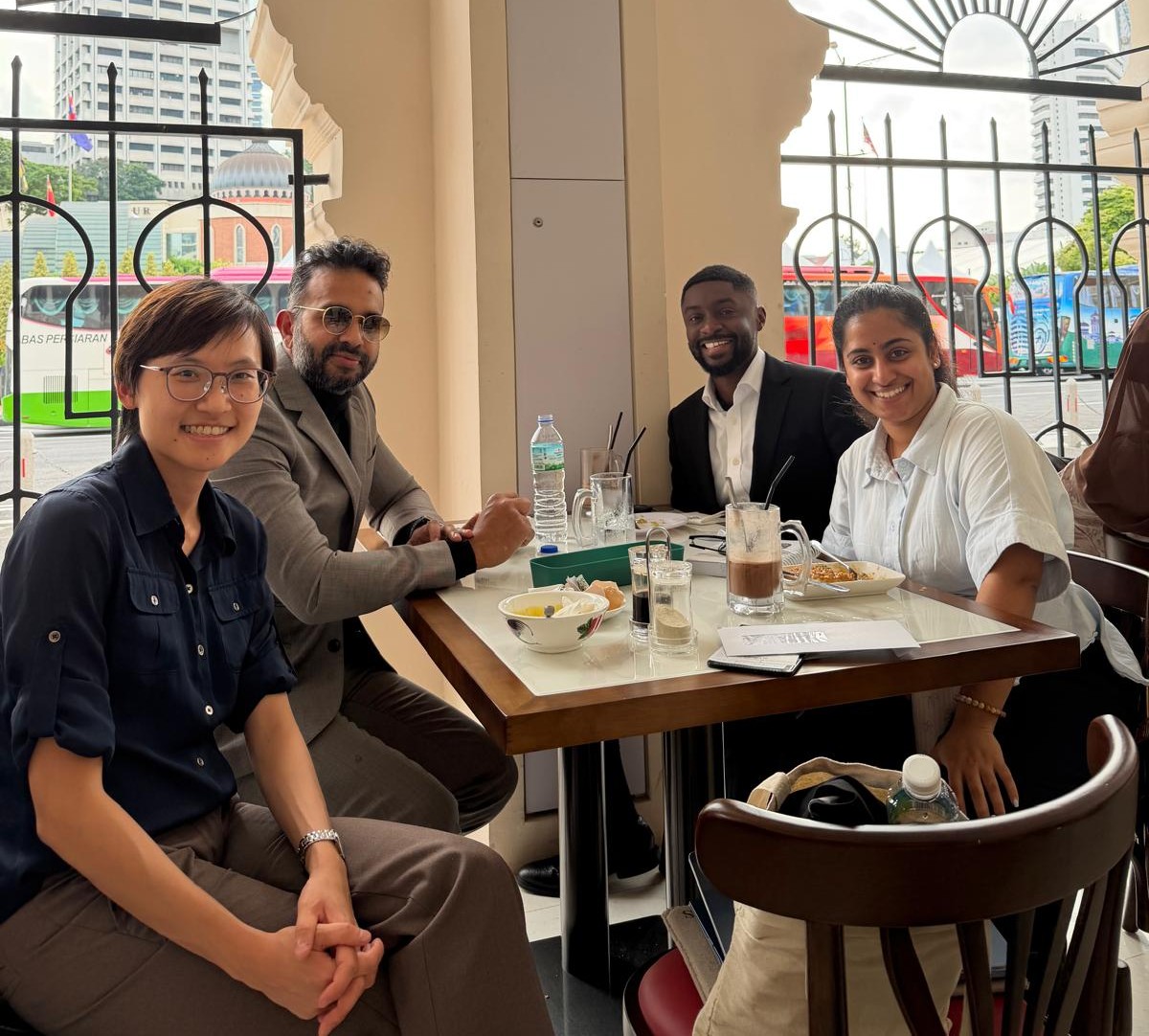
My introduction to Malaysia began with the hospitality that would become a recurring feature of the placement. Nimalan Devaraja, one of my principal hosts, collected me from my new flat in Kuala Lumpur and took me to the Royal Selangor Club, a historic landmark founded in 1884 and overlooking Merdeka Square in the heart of Kuala Lumpur. We ate banana leaf rice – a South Indian meal popular in Malaysia, traditionally served with rice, curries and accompaniments on a banana leaf.
Among those at the meal was Justice Dato’ Faizah binti Jamaludin, a Judge of the Malaysian Court of Appeal, who had played the lead role in facilitating my placement and would remain an important figure throughout my time in Malaysia.
I was also introduced to Professor Gurdial Singh Nijar, a prominent Malaysian lawyer and academic, and Abraham Au, a dispute resolution lawyer at GS Nijar, Professor Gurdial’s firm, with particular experience in constitutional, administrative and public law litigation.
Later, I met Collin Andrews, of Collin’s Law Chambers, a criminal defence lawyer and Chair of the Legal Aid Committee of the Malaysian Bar. Collin showed me around the Malaysian Bar Council building and we quickly began discussing legal aid and access to justice – themes which would recur throughout our time together.
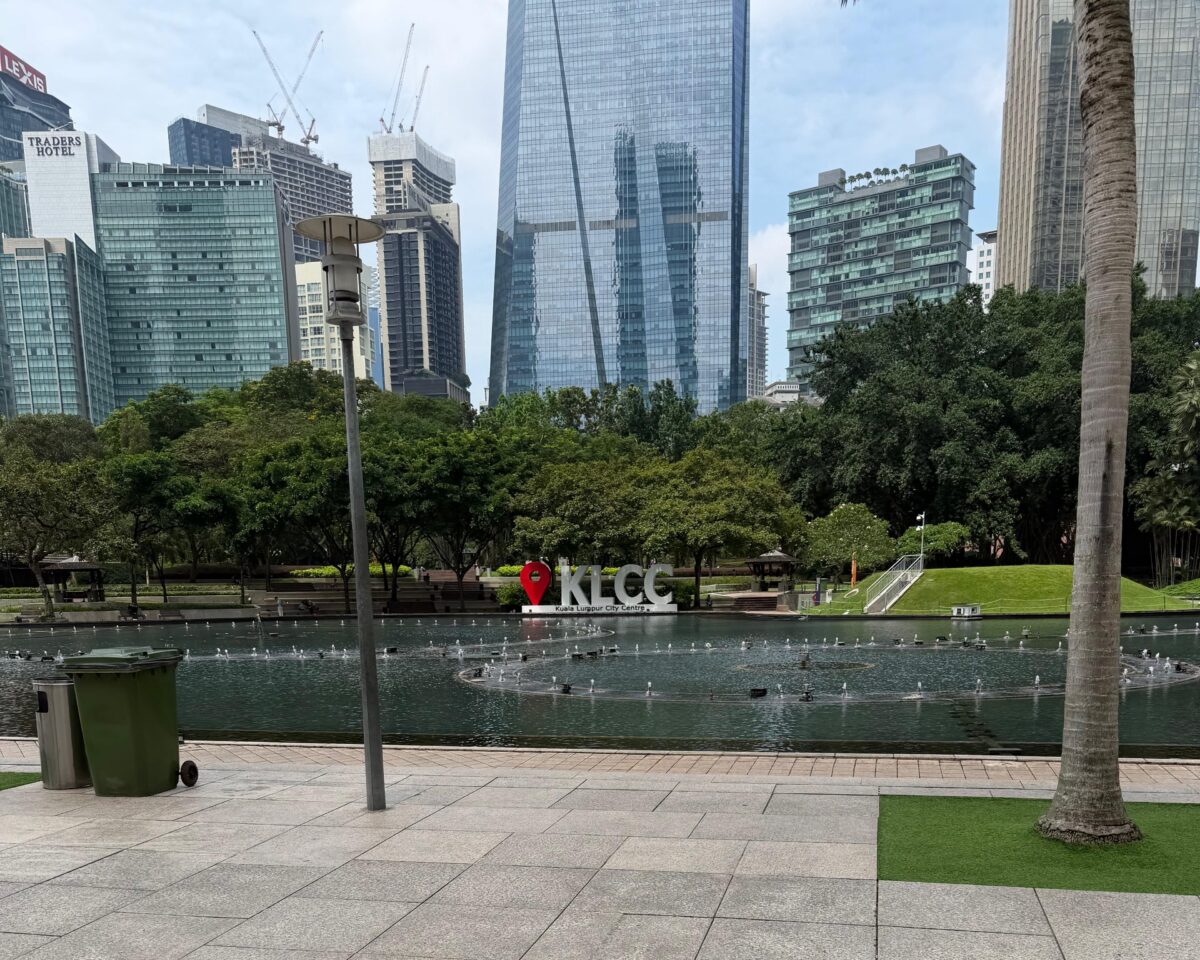
The first couple of days also involved the more ordinary business of learning how to live in Kuala Lumpur – working out the LRT, essentially KL’s version of the Tube or tram, getting used to travelling around by Grab, the local equivalent of Uber, and realising that the same app was just as useful for ordering food. Food delivery was a noticeable part of everyday life in KL, and ordering in quickly became part of my own routine too.
Alongside that, I was beginning to understand the geography of a place which, only a few days earlier, had been completely unfamiliar to me. Those small things were part of the experience too. By the time the court work began properly, I was starting to feel less like somebody who had simply arrived in KL and more like somebody who was going to be living and working there for the next six weeks.
Monday 15 June – Shah Alam High Court
My first substantive day in court was spent at Shah Alam High Court, shadowing Collin and his team.
Collin drove me there from Kuala Lumpur with his colleague, Hui Xian. I would also spend time during the placement with Shahlini Kumar, another member of his team. Both were generous with their time and, alongside Collin, helped me understand much more about the realities of day-to-day legal practice in Malaysia.
The drive to Shah Alam gave me one of my first opportunities to see much more of Kuala Lumpur and its surroundings than the relatively small area I had explored during my first few days. Travelling through KL and out towards Shah Alam began to give me a much better sense of the scale of the wider area – something that is difficult to appreciate when your first experience of a city is largely confined to the neighbourhood in which you are staying.
The journeys with Collin and his colleagues became useful parts of the placement in their own right. Time in the car meant that conversations about Malaysian law, politics, legal practice and the cases they were working on could begin well before we arrived at court and continue on the journey back.
The case that day concerned questions surrounding the citizenship and religious status of a child and illustrated very quickly how nationality, family status and religion can intersect within the Malaysian legal system.
The proceedings ultimately resulted in the child being recognised as Malaysian. What was particularly interesting was how significant the practical consequences of what might initially appear to be an abstract question of legal status could be – including in relation to healthcare, future employment and the wider rights which flow from citizenship.
Outside the hearing itself, I learned more about the relationship between Malaysia’s civil courts and its Sharia Courts. The Sharia Courts operate separately, with jurisdiction connected to a person’s status as a Muslim, meaning that questions of religious status can themselves become legally significant.
The linguistic demands of practice were also striking. Lawyers regularly operate across both Malay and English and, during an ordinary day, conversations could move between the two. I had the opportunity to observe proceedings conducted in Malay, which was a new experience for me and one that would recur during the placement.
We also discussed criminal sentencing, Malaysia’s abolition of the mandatory death penalty, and the continuing availability of whipping as a punishment. These were early examples of occasions on which observing the Malaysian system prompted an almost automatic comparison with practice in England and Wales.
Legal aid and professional training
My time with Collin was a significant part of the placement. As Chair of the Legal Aid Committee of the Malaysian Bar, he spoke to me in considerable detail about the Malaysian approach to legal aid and access to justice.
One feature which immediately interested me was that pupils in Malaysia are required to undertake 14 days of legal aid work as part of their training before admission to the profession.
What I found most interesting was the message behind the requirement. Legal aid is not presented as an optional extra or something to be discovered later in a lawyer’s career. It is built into the process of becoming a lawyer in the first place – an early reminder that membership of the profession comes with responsibilities as well as opportunities.
More broadly, my conversations with Collin reinforced the importance of treating legal aid not as something peripheral to the justice system, but as part of the infrastructure which allows legal rights to have practical meaning. A legal right is of considerably less value if the person who possesses it cannot obtain advice, representation or a realistic means of enforcing it.
I came away from those discussions particularly interested in whether there are aspects of the Malaysian approach to legal training and legal aid which might usefully inform conversations in England and Wales.
I was also keen not simply to record these observations for myself. During my time in Malaysia, I interviewed Collin for Legal Action Group magazine about Malaysian legal aid and access to justice, with a particular focus on whether there are aspects of the Malaysian experience from which England and Wales might learn.
Tuesday 16 June – Petaling Jaya Court
The following day, Collin drove me to Petaling Jaya Court.
By this point, these journeys were becoming another way of seeing Kuala Lumpur. Rather than simply travelling from one formal part of the placement to another, I was getting a sense of the different districts around the city, the traffic, the scale of the roads and the way KL gradually gives way to the surrounding parts of the Klang Valley.
The drives also created space for some of the less structured conversations which became one of the most valuable parts of the scholarship. A discussion about the hearing we were travelling to could quite easily turn into one about criminal justice, legal aid, professional culture or the differences between practising in our respective countries.
At Petaling Jaya, I continued learning about the structure of the Malaysian legal profession and observed proceedings conducted predominantly in Malay.
I found this unexpectedly useful. Because I could not rely upon understanding every word that was spoken, I found myself paying much closer attention to other aspects of courtroom communication – tone, structure, the interaction between advocates and the Bench, and the way in which submissions were received.
It made me reflect on how much of advocacy is communicated through matters beyond the words of the submission itself. There is something useful about temporarily removing one of the primary conduits an advocate ordinarily relies upon – language – and seeing what else remains.
Alongside the formal placement, I also began using some of what I was learning to draft a guide for tourists travelling to Malaysia as part of my The Law in 60 Seconds series, which I hope to share shortly.
Living in Kuala Lumpur while writing it was useful in itself. Questions about local laws and customs felt much less abstract when I was encountering the country day-to-day – travelling on public transport, ordering Grabs, eating in different parts of the city and gradually becoming more comfortable navigating KL independently.

Friday 19 June – Criminal Investigations
I also had the opportunity to learn more about the early stages of criminal investigations in Malaysia, including the position concerning access to legal advice during police interviews and the way in which interviews are recorded.
One difference which particularly interested me was that police interviews are not routinely audio-recorded in the same way as they are in England and Wales. We discussed the practical position concerning access to a lawyer and some of the difficulties which can arise at the investigation stage.
Again, the value was not simply in identifying a difference between two systems. Being temporarily outside my own jurisdiction made me think about practices at home which can easily become so familiar that we stop asking why they exist, or what safeguards they are intended to provide.
By the end of my first full week, I had already moved between different courts, spent considerable time with practitioners and begun to see parts of Kuala Lumpur I would probably never have encountered as an ordinary visitor. The legal learning and the experience of living in the city were beginning to overlap.
Week Two
Monday 22 June & Tuesday 23 June – Meeting Professor Gurdial Singh
By the beginning of the second week, I was becoming much more comfortable making my own way around Kuala Lumpur.
On some days that meant taking the LRT, joining commuters moving across the city and gradually learning which stations and lines I needed. On others, particularly when the heat, distance or location made it easier, I would order a Grab instead.
There was something enjoyable about that gradual change. Journeys which would have felt slightly daunting during my first couple of days were already becoming fairly ordinary.
Against that backdrop, I spent time with Professor Gurdial Singh discussing public interest litigation, legal education, access to justice and the wider social purpose of law.
My time with Professor Gurdial was not confined to a single formal meeting. Spending longer periods with him meant that conversations could develop in different directions – sometimes starting with a particular case and moving into much broader questions about what lawyers are for and what role litigation can play in society.
One phrase of his particularly stayed with me: “Where there is a grievance, there must be a remedy.”
Professor Gurdial spoke about how public interest litigation can have value even where it does not immediately succeed. A case can force a voice into the room which might otherwise never be heard and can challenge assumptions being made by government or powerful private interests.
We discussed citizenship and gender discrimination litigation, as well as environmental and land cases. He described litigation as sometimes creating an “amalgamation of forces” – residents organise, civil society becomes involved, politicians take an interest and the media follows. The legal case can therefore become the focal point for something much wider. His colleague, Abraham Au, was also great to speak to about these points.
Legal education and context
A particularly thought-provoking part of our conversation concerned legal education.
Professor Gurdial said that a law degree should not simply become a “ration card for accessing the country’s surplus”. His view was that becoming a lawyer brought with it obligations.
The wider discussion was also a reminder of the importance of context. Law cannot properly be understood when entirely detached from history, inequality, poverty, power and lived experience.
The question is not only what does the law say? It is also who does it serve, who does it exclude, and what assumptions does it quietly protect?
Those conversations often stayed with me on the journey back through Kuala Lumpur. One of the advantages of travelling around the city alone by LRT or Grab was having a little time between conversations to think about what I had just heard.
That was becoming a feature of the placement: a conversation might finish in an office, but I would still be turning it over in my head several LRT stops later.
Wednesday 24 June – Federal Court & Strategic Litigation
Observing advocacy
My time at the Federal Court provided an unexpected opportunity to think about advocacy.
The journey itself had already started to feel different from my first court visit. By now, getting myself across Kuala Lumpur and its surrounding areas felt increasingly normal rather than an expedition requiring constant checking of maps and directions.
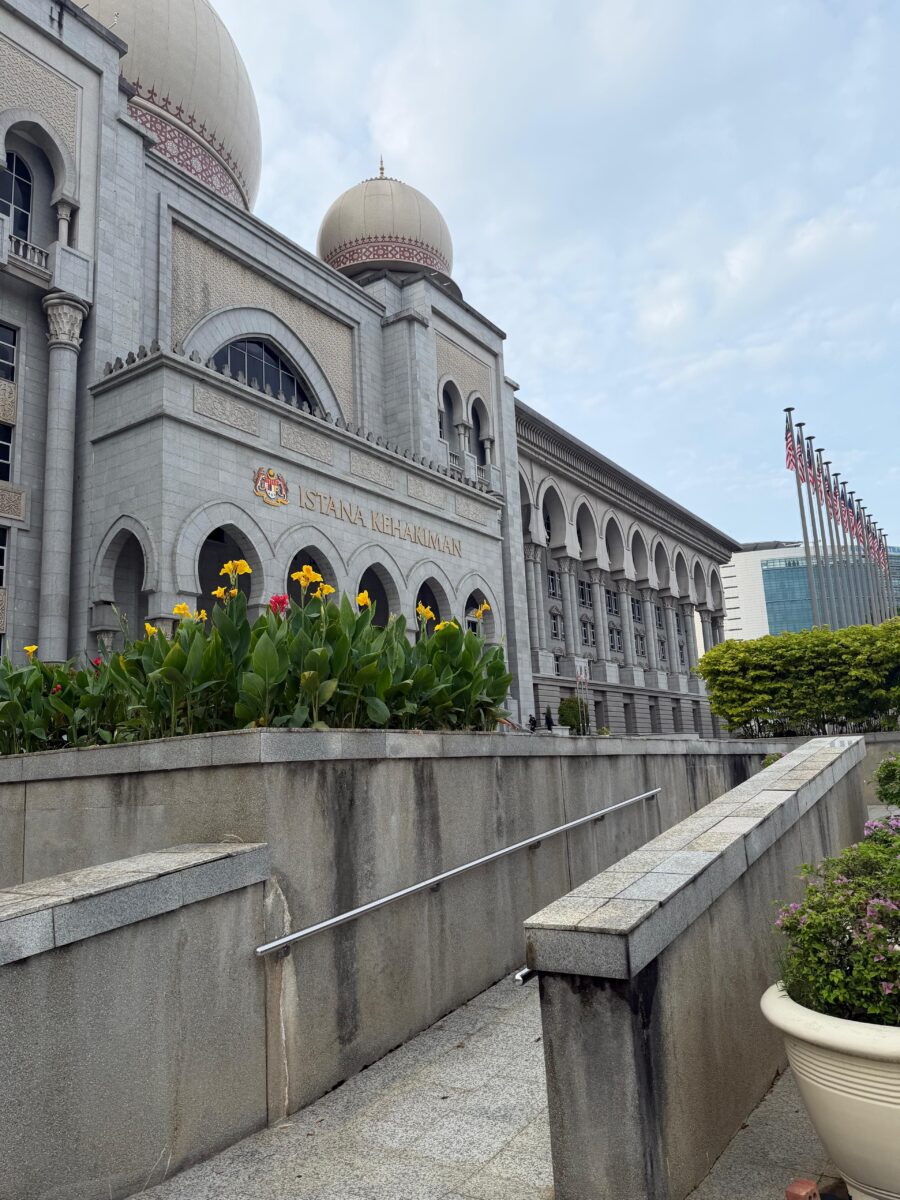
Because I knew very little about the advocates appearing before the Federal Court, I was not distracted by reputation or by any prior knowledge of who was regarded as particularly senior or accomplished.
I could simply ask myself: who sounds persuasive, and why?
I found that a useful way of auditing advocacy from the outside. The advocates who appeared most effective when addressing the Bench tended to be formal, concise and disciplined, and particularly responsive to the questions being asked by the judges.
There was something liberating about watching advocacy in that way.
Mid-Scholarship Reflection
By this point in the scholarship, I had begun to appreciate how difficult it would have been to recreate this type of experience independently.
The value of the Pegasus Scholarship was not simply the ability to observe Malaysian courts, but the opportunity to spend sustained periods of time with people who were prepared to explain how they approached their work and to speak candidly about different aspects of the Malaysian legal system.
Some of the most useful conversations did not take place during formal meetings at all.
They happened over meals, in offices, in Collin’s car on the way to court, or while travelling across Kuala Lumpur between different parts of the placement. A conversation about a particular hearing could quite easily develop into one about advocacy, sentencing, legal aid, religion, constitutional law or the wider purpose of the profession.
The practical side of living in Kuala Lumpur had become part of the experience too. I had begun to develop routines of my own – signing up to an MMA gym and becoming a regular at the coffee shop beneath my flat. Those small habits helped make the city feel less temporary and more like somewhere I was actually living for a period of time.
Additional media
Garden Court North Chambers – Christian Weaver wins Pegasus Scholarship by The Honourable Society of the Inner Temple
For further information, please contact Alex Blair, Communications Manager at Garden Court North Chambers: ablair@gcnchambers.co.uk